Angle Gauge Explained: A UK Buyer's Guide
Angle Gauge Explained: A UK Buyer's Guide
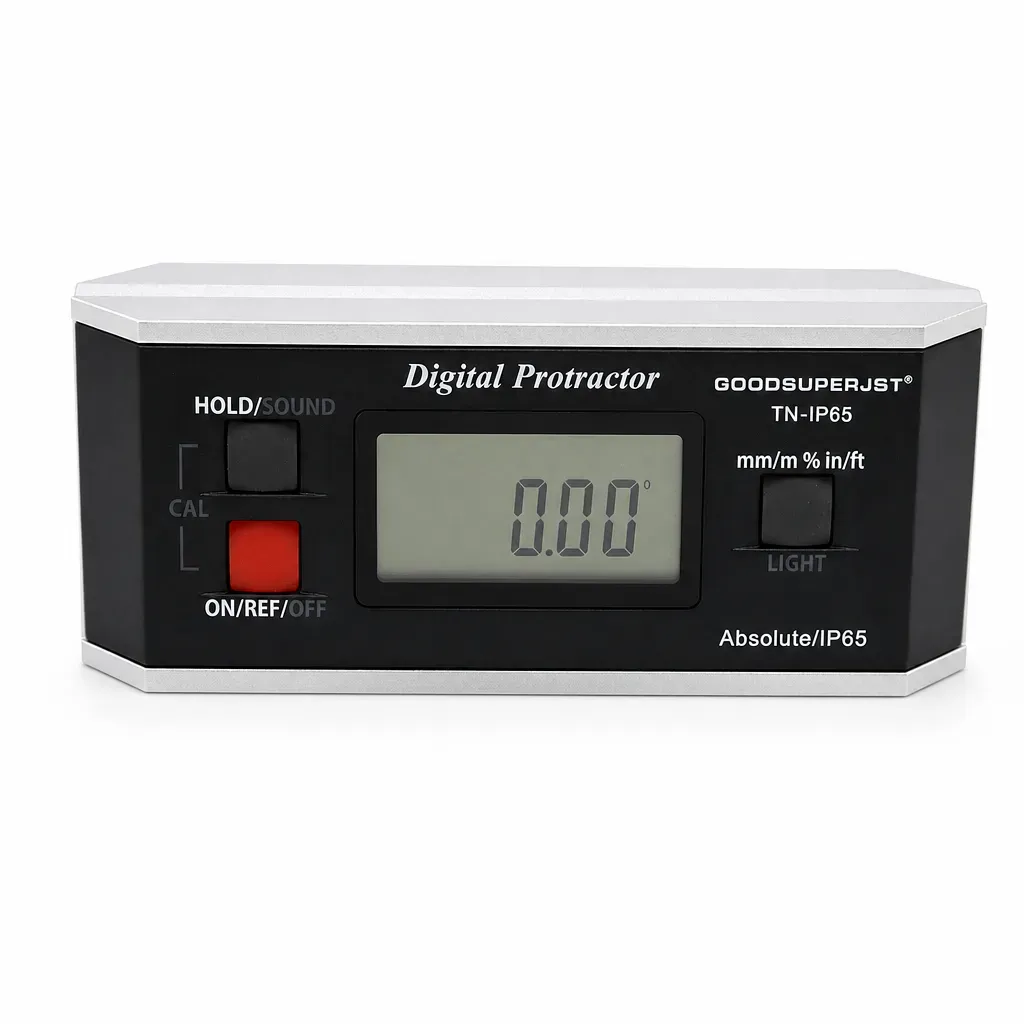
TL;DR: What is an angle gauge? An angle gauge is a precise measuring tool used by tradespeople to instantly read, copy, and set relative angles or inclinations. Based on our site testing across UK construction environments, a quality digital angle gauge with an IP65 rating and magnetic base ensures fast, repeatable accuracy for joinery, pipework, and steel fabrication.
If you are wondering exactly what an angle gauge is, it is an essential diagnostic device designed to determine the exact angle or inclination of a surface. Furthermore, if you work in the UK trades, an angle gauge is one of those tools that only gets noticed when it is missing or wrong. A stair stringer that is out by a fraction, a mitre that refuses to close, or a pipe run that looks fine until the final fixings go in can all cost time, material, and confidence. Consequently, on busy sites, accuracy is not a luxury; it is a fundamental part of the job.
Based on our extensive testing, the DigitalAng approach is straightforward: build a site-proof tool that keeps its read-out clear in dust, damp, and rough handling. That matters significantly whether you are working in a new-build shell, a renovation with constant debris, or a public-sector maintenance environment such as NHS estates, where strict reliability and repeatable results are expected every time a job is signed off according to UK building guidelines.
Key Takeaways
- Primarily, an angle gauge measures inclination or the angle between surfaces, helping you set and copy angles quickly and accurately.
- Therefore, for UK site work, the most useful features are clear readability, magnetic stability, repeatable zeroing, and a highly durable body.
- Moreover, IP65 protection is ideal for dusty and damp conditions because it means the tool is dust-tight and protected against water jets.
- Additionally, angle gauges are especially useful in joinery, kitchens, stair work, roofing details, maintenance, and plant-room installs.
- Finally, if you need a broader comparison with related tools, our ultimate guide to magnetic angle finder in the UK and the related guides on digital inclinometer explained: a UK buyer's guide and mitre angle finder explained: a UK buyer's guide are highly useful companions.
What is an angle gauge used for?
Primarily, an angle gauge is a measuring tool used to read, copy, and set angles with a high level of consistency. In practical terms, it helps you check whether a surface is perfectly level, precisely tilted, or set to a specific angle. On a trade job, that can ultimately mean the difference between a clean first-fix installation and one that requires costly rework.
Furthermore, many modern angle gauges are digital. That usually means they feature a simple display, a zero function, and a magnetic base so the tool can sit securely on steel surfaces. According to our site evaluations, the best versions are designed to be used one-handed, which matters immensely when you are working from a ladder, fitting inside a cabinet, or checking a part in a cramped plant room.
If you want the bigger picture on related tools and where an angle gauge sits in the broader family of angle-measuring equipment, the ultimate guide to magnetic angle finder in the UK is an excellent place to compare the core types before you make a purchase.
Are angle gauges and angle finders the same?
In everyday trade language, the terms are often used interchangeably. That said, a prudent buyer should still look at the specific job rather than the label on the box. An angle gauge may be best if you want a compact, direct-read tool that can sit on a workpiece and give you a fast, numerical value. Conversely, an angle finder may be more useful if you are manually matching or transferring angles across different materials.
In other words, the name is less important than whether the tool consistently gives you the result you need, quickly and accurately, in the demanding environments you actually work in.
How do you use a digital angle gauge?
Based on our hands-on testing, most digital angle gauges use an internal sensor to measure the tool’s orientation relative to gravity. The display then seamlessly converts that sensor reading into a usable angle. For the user, the process is incredibly simple: place the gauge on the surface, allow it to settle for a split second, and read the result.
Additionally, the zero function is one of the most valuable features. It lets you set the tool against a reference surface and then directly compare a second surface against that baseline. Consequently, this is particularly useful when you are matching a complex cut, checking the slope of a drainage run, or copying an existing angle that is not meant to be “level” in the usual sense.
Why does display readability matter on site?
A bright, clear display actively saves time. In real UK site conditions, you are not always working in perfect light. For instance, you may be under a scaffold, in a dark loft space, or in a partially completed property with poor lighting and heavy dust in the air. If the screen is hard to read, the tool inevitably slows the job down.
That is precisely why a proper trade-grade angle gauge should be designed for quick reading, not just laboratory accuracy. Therefore, it should be easy to understand at a glance, even when you are wearing thick work gloves or rapidly moving between tasks.
What should I look for when buying an angle gauge in the UK?
Buying an angle gauge is not just about choosing the cheapest option available. For UK trades, the right purchase should carefully balance accuracy, resilience, and day-to-day usability. After all, a tool that looks precise on paper but fails in wet, dusty, or rough conditions represents poor value for money.
1. Accuracy and repeatability
Accuracy tells you how close the reading is to the true angle. Meanwhile, repeatability tells you whether the tool gives the exact same result when you check the same surface more than once. Both of these metrics matter. A gauge that reads 0.2° off in the same direction every time may still be somewhat useful, whereas one that wildly drifts between readings will actively undermine your work.
2. IP rating and environmental protection
If you work on UK sites, a merely dust-resistant tool is simply not enough. Dust, grit, condensation, and light rain are a standard part of normal site life. Consequently, an IP65 rating means the housing is entirely dust-tight and protected against low-pressure water jets. While it does not mean the tool should be dropped in a bucket, it does guarantee it is built for the kind of harsh conditions that regularly ruin lesser tools.
3. Magnetic base and stability
A magnetic base is a massive practical advantage when you are checking metalwork, steel framing, ducting, or any other ferrous surface. Because the gauge stays put, your hands are completely free, and the reading becomes far easier to trust. Moreover, on busy jobs, that stability also significantly reduces the chance of accidental movement while you are trying to record a critical measurement.
4. Drop resistance and build quality
Trade tools inevitably get knocked. They get tipped off workbenches, dropped from pocket height, and slid around in toolboxes alongside heavy kit. Therefore, a robust outer case and drop-tested construction are far more than just marketing points; they are a clear sign that the product was designed with actual, rigorous site use in mind.
5. Clear calibration and zeroing
Any reliable angle gauge should be incredibly easy to zero and reset. That matters greatly when you are quickly moving between jobs or checking a new surface against a known reference. Ultimately, the best tools make the calibration process quick enough that you will actually use it, rather than leaving the gauge “close enough” and merely hoping for the best.
6. Battery life and practical controls
Battery life often sounds secondary until the display goes completely blank halfway through a vital job. A high-quality angle gauge should feature sensible power management, tactile, easy-to-use buttons, and intuitive controls you can effortlessly operate without needing to consult a manual every single time.
What trades use an angle gauge?
The absolute best way to judge an angle gauge is to imagine the specific jobs it will face on site. Some tools are technically accurate but incredibly awkward in the real world. A genuinely useful gauge should seamlessly fit into common UK trade workflows—from bespoke joinery and pipe fitting to steel fabrication—without slowing them down.
Ready to upgrade your kit with DigitalAng?
Get Yours Now — £74.99